
Leave Your Message
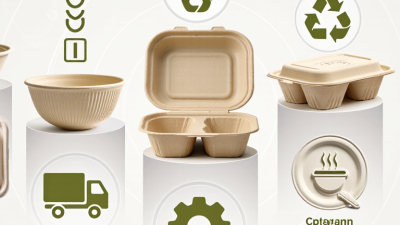
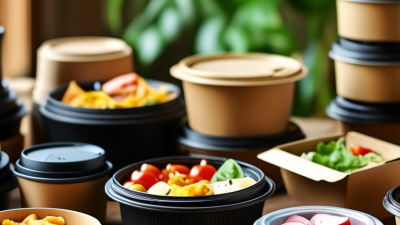
Sugarcane Bagasse Packaging is gaining attention among global buyers seeking practical alternatives to conventional plastic containers. Made from fibrous sugarcane residue, it can support foodservice, takeaway, catering, and retail applications. However, “plant-based” does not automatically mean suitable for every product or market. Material performance still depends on molding quality, moisture resistance, heat tolerance, and end-of-life conditions.
This guide introduces ten manufacturers serving international buyers, with attention to production capacity, export experience, product range, certifications, and customization options. A reliable supplier should provide clear specifications, food-contact documentation, factory information, and consistent sample results. Buyers should also examine carton strength, sealing performance, minimum order quantities, and shipping timelines. Small details matter, especially when containers face hot soup, oily meals, or humid warehouses.
Real-world testing is essential.
Supplier claims require verification. Certifications may differ by destination, and compostability statements can be misunderstood without proper facility guidance. Some manufacturers appear impressive online but offer limited technical support after payment. That risk deserves careful attention. Pricing also reflects more than the unit cost; tooling, packaging, inspection, freight, and compliance testing can change the final figure.
The selected manufacturers represent different strengths, not identical solutions. Some focus on high-volume molded tableware, while others serve private-label projects or specialized food packaging. Their suitability will depend on your market, product requirements, budget, and delivery expectations. Use this overview as a practical starting point, then request samples, review documents, and test products under actual operating conditions before signing a large purchase agreement.
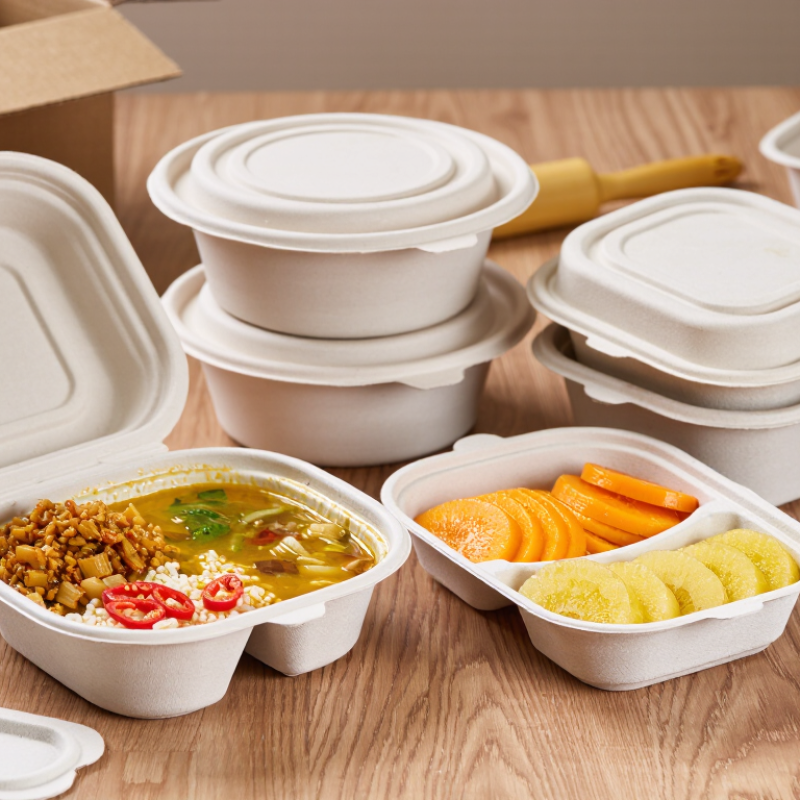
Sugarcane bagasse packaging uses the fibrous residue left after sugarcane juice extraction. Manufacturers clean, pulp, and mold these fibers into trays, bowls, plates, and protective inserts. The material feels slightly textured, yet it can handle hot foods when properly engineered. Its natural color also gives products an earthy appearance.
Performance depends on fiber quality, molding pressure, and moisture control. A reliable manufacturer should share test data for strength, heat resistance, oil barriers, and food-contact safety. Buyers should also examine factory consistency, batch traceability, and packaging dimensions. Small differences can cause stacking problems during international shipping.
Bagasse can reduce dependence on petroleum-based foam and some conventional plastics. Under suitable industrial composting conditions, many products may break down more readily than plastic alternatives. However, this benefit is not automatic. Plastic coatings, chemical additives, inks, and local waste systems can change the environmental result. It is not a perfect material.
Manufacturers should clearly identify coatings and disposal requirements. Buyers can request third-party certifications, lifecycle information, and samples from different production batches. A container that survives transport prevents waste, but excessive material increases its footprint. Practical testing matters more than attractive sustainability claims.cuntegn
Product and manufacturing capability benchmark for international sourcing; manufacturer names and brands intentionally omitted.
| No. | Common Product Category | Typical Bagasse Material Structure | Main Commercial Uses | Typical Performance Considerations | Sustainability and Compliance Considerations | Typical Buyer Segment |
|---|---|---|---|---|---|---|
| 1 | Molded Fiber Food Trays | Pressed sugarcane fiber pulp, commonly blended with water-based functional additives where required. | Ready meals, meat and produce trays, takeaway meals, bakery items, and catering portions. | Good rigidity and nesting efficiency; grease and moisture resistance depend on the coating and forming process. | Uncoated versions are generally suitable for fiber recycling or industrial composting where accepted. Coatings must be assessed separately. | Foodservice |
| 2 | Clamshell Takeaway Containers | Thermoformed or wet-pressed bagasse pulp with an integrated hinged lid. | Restaurant takeaway, meal delivery, street food, and institutional catering. | Designed for stackability and heat retention; hinge strength, leakage control, and venting require product-specific testing. | Often marketed as plastic-replacement packaging, but compostability depends on additives, coatings, inks, and local facilities. | Foodservice |
| 3 | Round Plates and Bowls | Dry-formed or wet-pressed molded fiber made primarily from cleaned bagasse pulp. | Events, cafeterias, restaurants, airline catering, and household disposable tableware. | Suitable for hot and cold foods; deep bowls require sufficient wall strength and controlled moisture absorption. | Fiber content, fluorochemical-free chemistry, food-contact safety, and compostability documentation should be verified before purchase. | Catering |
| 4 | Cups and Cup Carriers | Molded bagasse fiber for carriers; cups may use molded fiber or a fiber body with a separate barrier system. | Coffee shops, beverage delivery, cinemas, offices, and event venues. | Carriers require compression strength and accurate cup fit; direct liquid-contact performance depends on the barrier layer. | Mixed-material cups can complicate recycling or composting. Buyers should request barrier composition and disposal instructions. | Beverage |
| 5 | Egg and Produce Trays | Recycled or virgin molded bagasse pulp formed into protective cavities. | Egg cartons, fruit trays, vegetable inserts, and agricultural distribution packaging. | Strong cushioning and ventilation; moisture resistance is important for chilled or high-humidity supply chains. | Usually compatible with paper-recycling streams when clean and free from unsuitable coatings; local mill acceptance varies. | Agrifood |
| 6 | Protective Electronics Inserts | Engineered molded pulp with tuned density, ribs, cavities, and dimensional tolerances. | Small appliances, consumer electronics, accessories, and component protection. | Provides cushioning and part separation; drop, vibration, compression, and humidity tests are normally required for validation. | Can reduce reliance on expanded plastic foam, but coatings, adhesives, and mixed-material assemblies affect recyclability. | Electronics |
| 7 | Cosmetic and Personal-Care Inserts | Fine-fiber molded pulp with smooth surfaces, shaped cavities, and optional printed or coated finishes. | Soap, skincare, cosmetics, toiletry sets, and gift packaging. | Requires clean edges, accurate fit, surface quality, and protection against abrasion during transport. | Water-based inks and recyclable fiber constructions generally simplify end-of-life handling; decorative laminates may not. | Retail |
| 8 | Industrial Component Packaging | High-density molded bagasse pulp with reinforced walls or custom partitions. | Hardware, automotive components, machinery parts, and export shipping protection. | Designed for load-bearing, anti-scuff protection, dimensional stability, and repeated handling in logistics networks. | Fiber packaging can be recovered through paper channels if uncontaminated; oil, grease, staples, and plastic attachments require review. | Industrial |
| 9 | Lids and Foodservice Accessories | Molded bagasse fiber or bagasse-based pulp composites, sometimes paired with separate fiber or biopolymer components. | Food containers, soup bowls, takeaway trays, portion cups, and catering kits. | Fit accuracy, steam management, heat resistance, and leak prevention are key purchasing criteria. | Buyers should distinguish fiber-only products from composite designs and confirm food-contact and compostability claims. | Foodservice |
| 10 | Custom Retail Gift and Presentation Boxes | Formed bagasse pulp shells, molded inserts, or hybrid paperboard-and-fiber structures. | Gift sets, seasonal products, premium food, promotional kits, and small retail goods. | Prioritizes appearance, fit, printability, surface smoothness, and protection during parcel delivery. | Monomaterial fiber designs are easier to sort and recycle; magnets, foils, plastic windows, and heavy coatings can reduce recoverability. | Retail |