
Leave Your Message
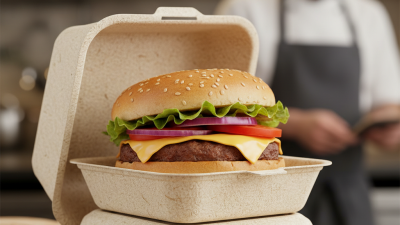
Packaging decisions now reach beyond appearance, cost, and shelf appeal. For food brands, the material behind a takeaway meal also communicates operational values. Bagasse Boxes offer a practical option made from sugarcane fiber, a residue left after juice extraction. Instead of treating this by-product as useless waste, manufacturers can shape it into sturdy food containers. That story feels tangible. A warm lunch arrives in a molded fiber box, not a petroleum-based plastic shell.
From hands-on packaging evaluations, performance depends on more than material origin. Bagasse Boxes can handle many hot, chilled, and moderately oily foods. Their rigidity supports stacking during delivery, while their light weight may reduce transport burdens. However, results vary by design, coating, moisture exposure, and supplier quality. A box holding curry for forty minutes faces a different test than one carrying dry pastries. This detail matters.
Responsible buyers should request food-contact documentation, manufacturing specifications, and credible compostability evidence. Local disposal systems deserve equal attention. A certified compostable package may still fail to break down in ordinary household conditions. That is an uncomfortable limitation. It should not be hidden.
Choosing bagasse also requires comparing fiber sourcing, energy use, production waste, and end-of-life routes. Independent standards and transparent supplier records strengthen confidence. Yet no package is automatically sustainable. Better decisions come from measuring real use, reducing unnecessary size, and matching the box to available recovery systems. Bagasse Boxes are promising, but careful review makes their environmental value more credible.
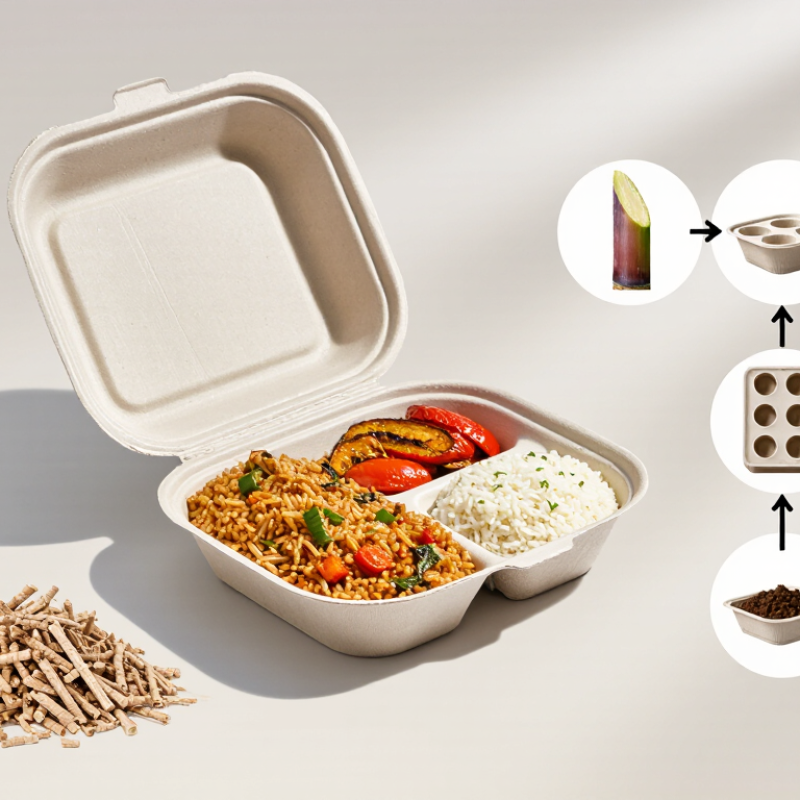
More than two billion tonnes of sugarcane are harvested worldwide each year. FAOSTAT’s Crops and Livestock Products database reports this scale across recent annual records. That volume creates a remarkably large fiber stream. After juice extraction, mills can use bagasse for molded trays, bowls, and protective inserts. That matters.
The International Sugar Organization identifies bagasse as the fibrous residue left after crushing sugarcane. Industry studies commonly estimate 250 to 300 kilograms of bagasse per tonne of processed cane, although yields vary. This makes feedstock local in many sugar-producing regions. Shorter transport routes can reduce handling emissions and storage pressure. Bagasse boxes can also reduce reliance on virgin fossil-based packaging. However, availability is seasonal. Scale alone proves little.
Packaging performance depends on drying, pulping, forming, and quality control. In practical use, a sturdy bagasse box should resist compression, oil, and condensation during delivery. Fiber can warp. Thin walls may soften. These limits deserve honest testing. ASTM D6400 or EN 13432 may support compostability claims, but certification must match the finished product and disposal facility. FAO’s data shows opportunity, not an automatic sustainability guarantee.
| Data dimension | Verified data or typical range | Why it matters for bagasse boxes | Source or qualification |
|---|---|---|---|
| Global sugarcane harvest | Approximately 1.9 billion tonnes per year in recent FAOSTAT reporting years | Shows the scale of the agricultural feedstock available for converting residues into packaging materials. | FAOSTAT, Crops and Livestock Products database; values vary by year and are rounded. |
| Bagasse generated from sugarcane | About 250–300 kg of wet bagasse per tonne of processed sugarcane | A substantial fibrous residue can be recovered after juice extraction and formed into molded packaging. | Common engineering estimates; the actual yield depends on cane variety, milling efficiency, and moisture content. |
| Typical moisture content of fresh bagasse | Approximately 45–55% by mass | Moisture affects transport weight, drying requirements, shelf stability, and manufacturing energy demand. | Typical values reported in sugarcane-processing and biomass-engineering literature. |
| Main structural components | Cellulose: about 40–50%; hemicellulose: about 20–30%; lignin: about 18–25% | The cellulose-rich fibers provide structure, while the lignocellulosic matrix supports molded-fiber strength. | Published bagasse-composition ranges; values differ with crop variety and analytical method. |
| Feedstock classification | Agricultural residue generated after sugarcane juice extraction | Using a residue can reduce dependence on virgin wood fiber when the material is sourced and processed responsibly. | FAO terminology and established biomass-processing classifications. |
| Renewable feedstock status | Sugarcane is a renewable annual or multi-year agricultural crop, depending on the production system. | Bagasse can support a bio-based packaging supply chain, but sustainability still depends on land, water, energy, and farming practices. | General agricultural and life-cycle-assessment principle; not a guarantee for every product. |
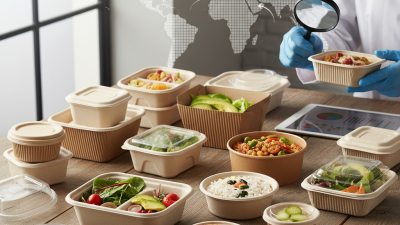
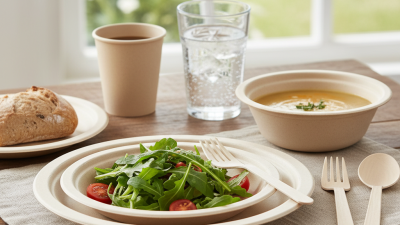
| Typical packaging applications | Food trays, takeaway containers, plates, bowls, and protective molded-fiber inserts | Molded bagasse products can provide lightweight, rigid forms for many single-use and food-service applications. | Application suitability depends on product design, wall thickness, moisture exposure, and coatings. |
| Compostability standard reference | EN 13432 requires industrial-compostability criteria, including biodegradation, disintegration, and ecotoxicity testing. | A bagasse box should be evaluated as a complete product, including inks, additives, barriers, and coatings. | European Standard EN 13432; certification and local waste-management conditions determine the applicable claim. |
| Food-contact suitability | Must be demonstrated through applicable food-contact regulations and migration testing. | Fiber origin alone does not confirm safety for hot, oily, acidic, or wet foods. | Requirements vary by market, formulation, coating, intended use, and temperature. |
| End-of-life consideration | Industrial composting may be required; local acceptance differs by region. | The environmental benefit is highest when collection and treatment infrastructure matches the product’s certified end-of-life pathway. | Local authority guidance and applicable compostability certification should be checked before making disposal claims. |
Note: Bagasse composition and yield figures are representative ranges rather than fixed specifications. Actual results depend on sugarcane variety, processing conditions, moisture, additives, and product design.