China has become a major sourcing base for food, retail, electronics, and cosmetic packaging. Its supplier network includes thermoforming factories, injection molding plants, and custom packaging converters. For buyers, the real challenge is not finding a Clamshell Container manufacturer. It is finding one that delivers stable quality, clear documentation, and dependable lead times.
Grand View Research estimated the global plastic packaging market at about USD 430 billion in 2023. Its report also forecasts continued growth through 2030. McKinsey research indicates that packaging represents roughly 40% of global plastics demand. These figures explain the growing interest in lightweight, transparent, and product-protective packaging. However, market growth does not guarantee responsible sourcing. Material selection, mold precision, sealing performance, and recycling compatibility still require careful checking.
This guide examines China’s leading clamshell manufacturers and suppliers through practical purchasing criteria. These include production experience, material options, quality systems, export capability, tooling support, and communication speed. Samples matter. A clear shell may look excellent but crack during transport. A low quotation may exclude molds, testing, or secondary packing. No supplier is perfect. Buyers should verify claims through factory audits, trial orders, inspection records, and measurable specifications. Reports from Smithers and other packaging analysts offer useful market direction, but supplier decisions still depend on evidence at factory level. This overview aims to connect industry data with realistic sourcing experience, helping buyers compare suppliers with greater confidence and fewer costly assumptions.
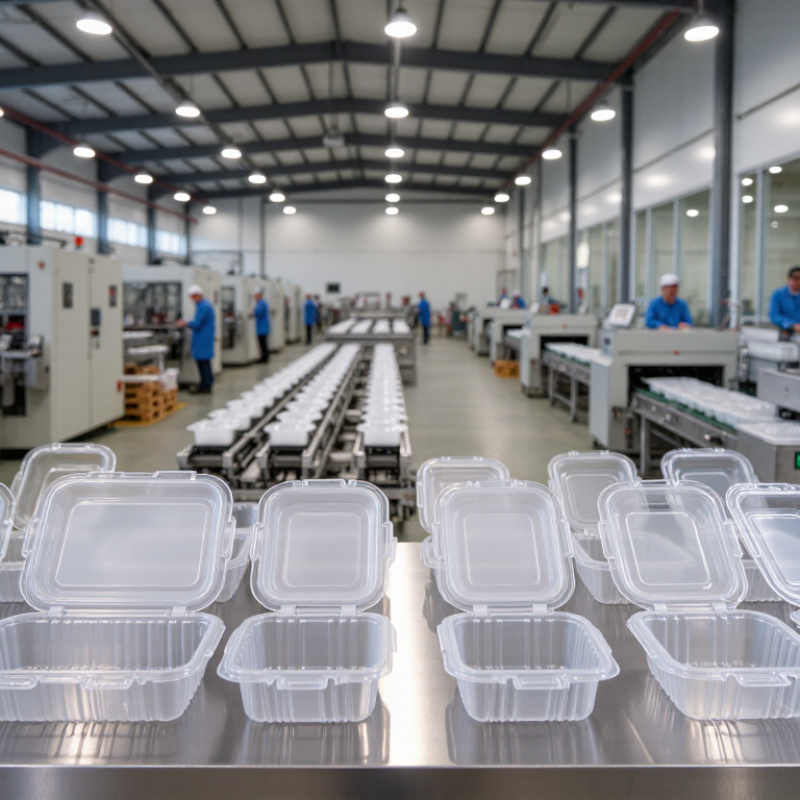
A clamshell container is a package with two connected halves that close around a product. The hinge often sits along one edge. A snap, tab, or heat seal keeps the package closed. Many clamshells use clear PET or PP plastic. Some use molded fiber for a lower-plastic option. Their shape lets shoppers inspect products without opening the package. In packaging evaluations, this visibility helps reduce handling damage and supports accurate product selection.
Clamshell containers appear in supermarkets, hardware aisles, electronics counters, and online fulfillment operations. They hold berries, salad ingredients, batteries, small tools, cables, toys, and personal-care accessories. Vented designs can support airflow around fresh produce. Tight closures help prevent loose parts from escaping during transport. Retail packaging also uses hanging holes for display hooks. The details matter. Poorly positioned hinges can make opening frustrating. Sharp edges may also affect handling comfort.
When comparing a Chinese manufacturer or supplier, buyers should examine material specifications, mold accuracy, closure strength, and production consistency. Request samples before approving large orders. Check wall thickness at corners, since thin areas may crack under pressure. Ask for food-contact or recycling documentation when the application requires it. A supplier should explain tolerances clearly and provide traceable quality records. The format is useful, but not perfect. Clear plastic improves visibility while increasing material concerns. Some designs also resist easy opening, especially for older users. That trade-off deserves honest testing, not optimistic assumptions.
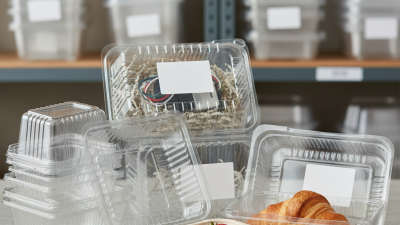
China’s clamshell packaging industry operates through a coordinated production chain. Suppliers usually source PET, PVC, or recycled plastic sheets from certified material producers. Engineers then design the package around product size, visibility, sealing needs, and transport conditions. Toolmakers create metal molds, often using digital drawings and sample products for accuracy.
Thermoforming machines heat plastic sheets until they soften. The material is pressed over molds, cooled, trimmed, and inspected. Workers check clarity, edge smoothness, dimensions, and closure strength. Some factories add printing, hanging holes, or heat-sealing areas. Production normally follows approved samples, but small changes can appear during large orders. That is where communication matters. A perfect drawing does not guarantee a perfect shipment. Experienced buyers request pre-production samples, material reports, and batch photos before mass production. They should also confirm carton strength and packing methods for long-distance transport.
Tips: Ask about material traceability, mold ownership, testing procedures, and minimum order quantities. Keep the packaging specification simple and measurable. Request a written tolerance range. It prevents arguments later. Do not judge a supplier only by low pricing; weak trimming or brittle plastic can create higher costs. Regular factory communication is useful, though not always easy. Some production details still need careful checking.
| Industry Dimension | Key Indicator | Typical Industry Data | How the Chinese Clamshell Packaging Industry Operates |
|---|---|---|---|
| Product Structure | Main clamshell formats | Two-piece hinged packs, heat-sealed trays with lids, and tamper-evident retail packs | Manufacturers select the format according to product geometry, visibility requirements, opening behavior, stacking needs, and the required level of tamper evidence. |
| Common Applications | Typical end-use sectors | Fresh produce, bakery goods, electronics accessories, hardware, toys, stationery, and small consumer products | Packaging suppliers commonly operate with sector-specific tooling and can adjust dimensions, wall thickness, ventilation, hanging holes, and sealing areas for different applications. |
| Material Selection | Frequently used plastics | PET, rPET, PP, PVC, and HIPS; the final choice depends on clarity, rigidity, heat resistance, and regulatory requirements | Material is supplied as sheet or film and is chosen based on product protection, transparency, forming temperature, food-contact suitability, recycling objectives, and expected transport conditions. |
| Recycled Content | Use of recycled plastic | Recycled PET is commonly available; the practical percentage depends on clarity, food-contact rules, supply, and customer specifications | Factories may use recycled-content material when the required appearance and performance can be maintained. Production records and material documentation are normally required for regulated applications. |
| Forming Process | Primary manufacturing method | Thermoforming from plastic sheet or roll stock | Heated sheet is formed over a mold by vacuum, pressure, or a combination of both. The formed web is then cooled, trimmed, inspected, and packed for shipment. |
| Tooling | Mold and die configuration | Prototype tooling, single-cavity molds, or multi-cavity production molds | Tooling is designed around cavity layout, draft angles, hinge geometry, stacking, trim lines, material distribution, and the buyer’s filling and sealing equipment. |
| Production Scale | Order and capacity model | Custom production is generally more economical at medium or high volumes; low-volume orders may use prototype or semi-automatic tooling | Factories typically quote separately for tooling, samples, mass production, printing, inserts, and secondary assembly. Minimum order quantities vary by material, mold design, and automation level. |
| Automation | Production equipment | Automatic or semi-automatic thermoformers, trimming presses, sealing machines, printing equipment, and packing lines | Higher-volume operations integrate forming, cutting, stacking, counting, and packing to improve consistency and reduce labor. Semi-automatic lines are often used for specialized or changing product designs. |
| Closure and Sealing | Common closure methods | Integral snap closures, heat sealing, ultrasonic sealing, adhesive labels, and tamper-evident features | The closure is matched to opening frequency, security requirements, filling speed, product shelf life, and whether the pack must be resealable or permanently closed. |
| Printing and Decoration | Available decoration options | In-mold decoration, offset or flexographic printing, labels, sleeves, inserts, and printed paperboard cards | Decoration is selected according to surface energy, print area, color requirements, order volume, recyclability targets, and whether branding must remain separate from the plastic component. |
| Dimensional Design | Design variables | Length, width, depth, wall thickness, hinge radius, flange width, stacking profile, and hanging-hole geometry | Suppliers normally require a technical drawing, product sample, or 3D file before preparing a quotation. Design-for-thermoforming helps prevent thin corners, webbing, distortion, and poor closure fit. |
| Quality Control | Typical inspection points | Dimensions, weight, appearance, transparency, wall distribution, hinge function, closure force, seal integrity, and contamination | Quality checks may be performed on incoming resin or sheet, during forming, after trimming, and before shipment. Sampling plans are usually agreed with the buyer for customized orders. |
| Food-Contact Requirements | Compliance considerations | Material composition, migration testing, hygiene controls, traceability, and market-specific food-contact regulations | Food packaging projects require documentation for the selected resin and additives. Applicable requirements differ between destination markets, so the importer’s regulatory specification must be confirmed before production. |
| Sustainability | Design and recycling factors | Mono-material construction, reduced material use, recycled content, clear labeling, and avoidance of unnecessary mixed components | Manufacturers increasingly optimize material thickness and pack weight while considering recyclability. Paper cards, adhesives, coatings, and labels can affect the recyclability of the finished package. |
| Export Operations | International supply process | Sample approval, tooling confirmation, production, inspection, carton packing, export documentation, and sea or air freight | Export orders are commonly managed through a sequence of technical confirmation, pre-production sampling, mass production, final inspection, and shipment under agreed commercial terms. |
| Packaging Efficiency | Logistics considerations | Nested parts, stackable designs, protective separators, standardized cartons, and optimized pallet loading | Because empty clamshells can occupy significant volume, suppliers design nesting depth and carton dimensions carefully to reduce freight cost, deformation risk, and warehouse space requirements. |
| Supplier Evaluation | Useful buyer criteria | Relevant forming capability, material traceability, tooling experience, quality systems, sample accuracy, lead-time control, and export experience | Buyers generally compare technical capability and documented quality performance rather than price alone. A production sample, mold-flow review, material certificate, and inspection plan can reduce project risk. |
China’s clamshell supply base includes several distinct manufacturer types. Integrated thermoforming factories produce PET, RPET, PVC, or PP shells, then add die-cut cards, sealing, and inspection in one facility. Their advantage is process control and stable volume. Custom mold specialists serve products with unusual shapes, hanging holes, locking tabs, or tamper-evident features. They often begin with a 3D drawing and provide a sample before mass production.
Packaging converters focus on printing, folding cards, and retail presentation. They may purchase formed shells from another factory, so buyers should confirm responsibility for dimensions and sealing strength. Export-oriented suppliers coordinate documentation, container loading, and inspection, but they may not own production equipment. This distinction matters. A polished website proves little.
Sustainability-focused suppliers use recycled PET or mono-material structures. The Ellen MacArthur Foundation reports that packaging represents about 40% of global plastic use, increasing pressure for simpler designs. China’s National Bureau of Statistics recorded 74.885 million tonnes of plastic-product output in 2023, showing the scale of its manufacturing network. However, national output is not clamshell-specific. Buyers should request resin certificates, recycled-content evidence, thickness reports, and migration testing when relevant. Smithers’ 2024 rigid-plastics research also points to continued demand for lightweight packaging, yet lightweighting can reduce hinge durability. A thinner shell is not always a better shell. Supplier audits, pilot runs, and drop tests remain necessary.
Choosing a reliable clamshell container manufacturer requires more than comparing catalog photos. Inspect sample hinges, edges, and locking points under repeated opening tests. A quality container should close evenly, resist cracking, and maintain clear visibility after handling. Ask whether the material is PET, RPET, PVC, or another polymer, then confirm its thickness and intended application. Material names alone prove little.
Production capacity also deserves direct verification. Request monthly output, mold availability, lead times, and quality-control records. A capable supplier should explain how it manages color variation, trimming accuracy, and batch inspection. Certifications must match your market and product use. Check current certificates, testing laboratories, scope, and expiration dates. Do not accept scanned documents without verification. Small details matter.
Tips: Order samples from different production batches. Measure wall thickness at several points. Test stacking, sealing, and transport vibration. Ask for corrective-action records, not only polished claims. I have seen attractive samples fail during heat exposure. That risk is easy to miss. Leave time for an independent inspection, especially when capacity appears unusually high.
Selecting a Chinese clamshell container supplier requires more than comparing unit prices. Ask how long they have produced your required format, material, and closure style. Request factory photos, production records, and recent test reports. A reliable supplier should explain material grade, wall thickness, hinge performance, and sealing consistency clearly. Verify whether samples come from regular production, not a hand-finished batch. That detail matters.
Order samples before signing a large purchase agreement. Test stacking, opening force, drop resistance, clarity, and label adhesion under real conditions. Confirm dimensions with a drawing, including tolerances and cavity depth. Discuss mold ownership, tooling maintenance, minimum order quantity, lead time, payment stages, and packaging protection. Use a written specification sheet. Verbal promises can disappear. Agree on inspection points and acceptable defect limits. An independent pre-shipment inspection may cost more, but it can reveal warped lids, flash, or uneven edges before loading.
Tips: Compare at least three suppliers, but do not choose the cheapest quote automatically. Check business registration and export experience through verifiable documents. Request a video call from the production floor, then compare it with the sample packaging. Keep one approved sample as your reference standard. I once underestimated carton strength; moisture changed the result. That mistake taught me to test transport conditions, not only factory performance. Keep communication precise, patient, and documented.
Typical material-property benchmarks can help buyers screen clamshell container suppliers before requesting samples, technical sheets, food-contact documents, and production audits.
PET and rPET generally provide high transparency and strong barrier performance, while PP offers lower density and higher heat resistance. PLA is bio-based but usually requires more careful temperature and end-of-life planning. Values shown are typical published polymer-property ranges and can vary according to grade, additives, sheet structure, and forming conditions.