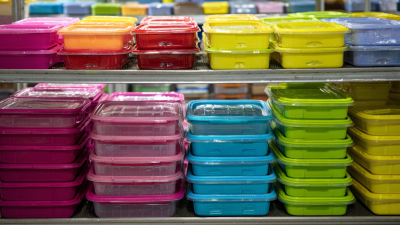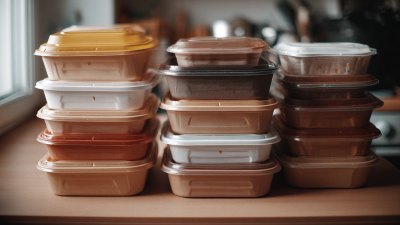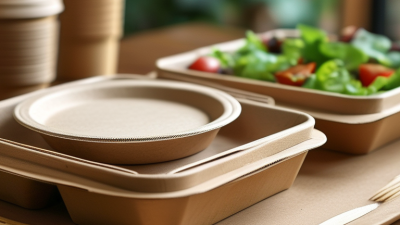
Choosing Disposable Food Containers in 2026 requires more than comparing prices and attractive designs. A container may look practical on a delivery counter, yet fail when filled with hot curry, oily noodles, or chilled salad. Material safety, leak resistance, stacking strength, insulation, and end-of-life options all influence the real cost. No single container wins every test.
Industry data shows why this decision matters. The OECD’s Global Plastics Outlook identifies packaging as the largest source of plastic waste, representing about 40% of total plastic waste worldwide. The United Nations Environment Programme also reports that packaging uses approximately 36% of global plastic production. These figures place foodservice packaging under growing environmental and operational scrutiny. Meanwhile, market analyses from Grand View Research and Smithers indicate continued demand for convenient, portion-controlled, and delivery-ready food packaging through this decade.
A reliable selection process should connect these trends with daily experience. Test the container with the actual menu, not plain water. Check whether the lid stays secure after ten minutes in a delivery bag. Measure how many units fit on a shelf, in a carton, or inside a vehicle. Review supplier documentation for food-contact compliance, recycled content, temperature limits, and disposal guidance. Compostable, paper-based, plastic, and reusable systems each have trade-offs. Some “eco-friendly” claims remain difficult to verify. That uncertainty deserves attention, not marketing optimism. This guide explains how to compare Disposable Food Containers using performance evidence, supplier reliability, customer expectations, and credible sustainability data.
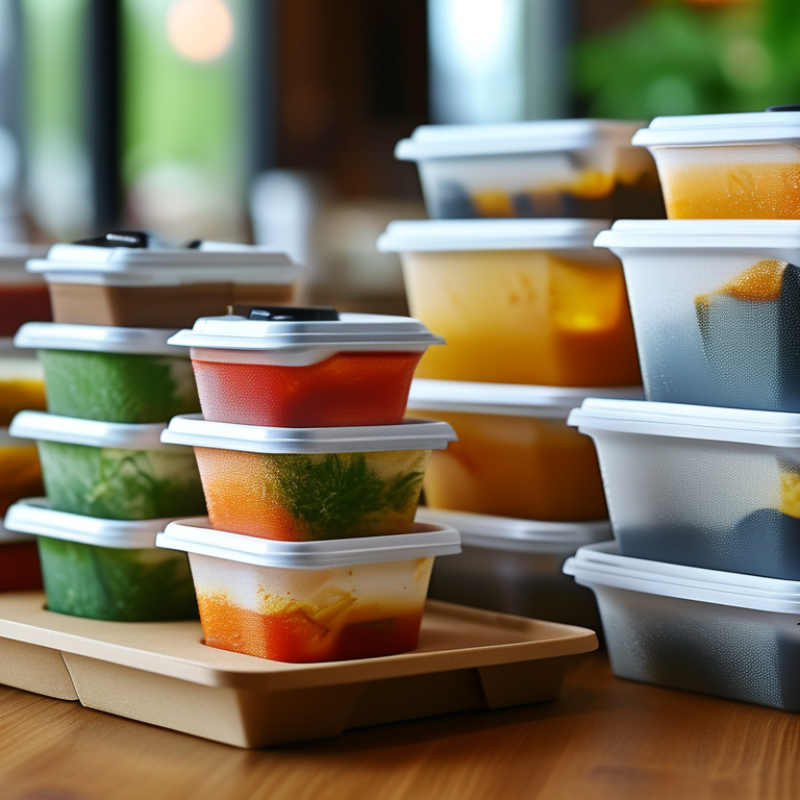
Define the service profile before comparing materials or prices. Start with portion size, not container volume. A 500-ml box may hold rice well but crush fried food. Leave headspace for sauces and expansion.
UNEP’s Food Waste Index Report 2024 estimates that 1.05 billion tonnes of food were wasted in 2022. Accurate portions can reduce avoidable waste.
Temperature changes the design. The FDA Food Code 2022 recommends holding cold foods at 41°F (5°C) or below and hot foods at 135°F (57°C) or above. A container should tolerate the actual filling temperature, reheating method, and transport conditions.
Steam needs room to escape. Otherwise, fried items become soft, and lids may distort.
“Microwave-safe” is not enough. Check the use instructions.
Hold time reveals hidden weaknesses. For a ten-minute pickup, a basic leak-resistant lid may work. For a two-hour delivery, test seal strength, stacking pressure, condensation, and tipping.
Soup needs deeper walls and a reliable closure. Oil-heavy meals need stronger resistance.
In trials, fill containers fully, shake them, stack them, and inspect the bag afterward. This sounds simple. It is often skipped.
A perfect specification can still fail with oversized portions, uneven sealing, or careless handling. Reflect on the real service, not the showroom sample.

Food-contact safety should guide every disposable container decision. A container may look clean and sturdy, yet its compliance evidence can be incomplete. Check whether the material matches FDA 21 CFR, EU Regulation 1935/2004, or the relevant GB 4806 standard. These frameworks address different markets and materials. FDA 21 CFR requirements often depend on the polymer and intended use. EU 1935/2004 requires materials not to transfer harmful substances, alter food, or affect its taste. GB 4806 contains material-specific national standards for food-contact products.
Ask suppliers for current declarations, migration test reports, material specifications, and production traceability. Confirm testing conditions, including heat, contact time, oily foods, acidic sauces, freezing, and microwave use. A report for cold water does not prove safety for hot soup. It is an easy mistake. Also check whether inks, adhesives, lids, and coatings contact food directly. The complete container matters, not only the base material.
Tips: Match the container to its real use, not its advertised appearance. Look for batch numbers and clear documentation. Verify laboratory scope and test dates. If a supplier sends only a general certificate, ask focused questions. I would pause when answers stay vague. Compliance files can be technically correct but still too old, incomplete, or unrelated to the chosen size. Recheck before large orders, because designs and raw materials sometimes change quietly.
How to Choose Disposable Food Containers in 2026?
A reliable choice begins with evidence, not color or marketing language. ASTM D6400 and EN 13432 evaluate whether certain plastics can break down under controlled composting conditions. They do not prove home compostability. They also do not guarantee acceptance by every local facility. Check the test scope, certification documents, and required composting conditions before approving a container.
Material performance still matters. Molded fiber can feel sturdy with dry foods, yet moisture may weaken it during long service. PLA can suit selected applications, but it usually needs commercial composting infrastructure. Recycled PET may offer clear recycled-content data and useful rigidity, while polypropylene often performs better with hot, oily meals. Ask for the percentage of post-consumer recycled content, not only the word “recycled.” Request traceability records and current laboratory reports. Documentation can be incomplete.
Tips: Test filled containers at actual serving temperatures. Observe leaks after thirty minutes. Measure lid fit, stacking pressure, and odor transfer. Compare the supplier’s claims with independent records where possible. A lower-impact material may still fail if it causes food waste or requires replacement. This part is easy to overlook. I have seen attractive packaging perform poorly after transport, especially when lids flex under stacked cartons. Recheck assumptions before placing a large order.
A container can look sturdy and still fail during delivery. Test seal strength with ASTM F88 methods. Pull the sealed film slowly, then inspect for channels, wrinkles, and uneven bonding. A practical target is consistent opening force across at least ten samples. One strong sample proves very little.
Stack-load testing matters when containers sit in a crowded delivery bag. Use ASTM D4577 principles and place filled containers under increasing weight. Check for lid distortion, corner collapse, and sauce migration after one hour. For microwave use, follow the material supplier’s documented temperature limits. Heat oily food separately, because oil can create hotter spots than water-based meals. The FDA Food Code provides useful food-contact and handling guidance, but it does not replace product-specific validation. Real kitchens are messier.
Tips: Test cold, room-temperature, and hot meals. Add a shake test after sealing. For leak resistance, use colored water first, then repeat with soup, curry, or dressing. ASTM F1929 and F2096 offer recognized approaches for detecting leaks. Record failures, not just pass rates. A 2% failure rate may sound small, yet it becomes 20 leaking containers in a thousand orders. The OECD’s Global Plastics Outlook identifies packaging as roughly 40% of global plastic use, adding pressure to choose lighter designs without sacrificing performance. I still treat laboratory results as screening evidence, not proof of daily reliability. Drop tests, rushed packing, and imperfect lids can expose weaknesses that a clean bench misses.
How to Choose Disposable Food Containers in 2026?
A low purchase price can hide a high compliance cost. Calculate the full cost per serving, not merely the container price. Include transport, storage, labor, waste collection, and recycling charges. Add the cost of labels, staff training, and damaged stock. Small differences accumulate quickly.
The European Union’s Packaging and Packaging Waste Directive set a 65% overall packaging recycling target for 2025. Plastic packaging had a separate 50% target. Eurostat reported that the EU recycled 67.5% of packaging waste in 2022, while plastic packaging reached only 42.1%. These figures matter when selecting disposable food containers. A container may be technically recyclable but rarely recycled locally. Check accepted materials with the actual municipal or commercial waste operator.
Run a simple comparison. If one container costs €0.08, logistics cost €0.02, and waste handling costs €0.04, the total is €0.14. A €0.10 alternative may create €0.07 in sorting and disposal costs, reaching €0.17. The cheaper option loses. Test it in real service conditions. Check leakage after hot filling, stacking stability, and contamination from sauces. Material reduction also deserves scrutiny. Lighter packaging can reduce transport emissions, but it may fail during delivery and increase food waste. That trade-off is easy to miss. Use documented supplier specifications, local recycling guidance, and current data from Eurostat and the European Environment Agency. Pricing assumptions should be reviewed quarterly, because waste fees and collection rules change.
| Container Type | Typical Capacity | Unit Weight | Representative Unit Cost | Transport Cost per Unit |
End-of-Life Cost per Unit |
Total Cost per Unit |
Total Cost per 1,000 Units |
Packaging Mass per 1,000 Units |
Planning Recovery Assumption |
Recovered Mass per 1,000 Units |
Screening Result Against 65% EU Target |
|---|---|---|---|---|---|---|---|---|---|---|---|
| Polypropylene (PP) hinged container | 750 ml | 18 g | $0.095 | $0.004 | $0.006 | $0.105 | $105.00 | 18.0 kg | 50% | 9.0 kg | 2.7 kg below 65% |
| Recycled PET (rPET) clear container | 750 ml | 22 g | $0.130 | $0.004 | $0.008 | $0.142 | $142.00 | 22.0 kg | 70% | 15.4 kg | 1.1 kg above 65% |
| Molded fiber bagasse container | 750 ml | 35 g | $0.160 | $0.005 | $0.010 | $0.175 | $175.00 | 35.0 kg | 70% | 24.5 kg | 1.8 kg above 65% |
| Paperboard with PE coating | 750 ml | 30 g | $0.145 | $0.005 | $0.009 | $0.159 | $159.00 | 30.0 kg | 75% | 22.5 kg | 3.0 kg above 65% |
| Aluminium food tray with lid | 750 ml | 28 g | $0.200 | $0.006 | $0.012 | $0.218 | $218.00 | 28.0 kg | 70% | 19.6 kg | 1.4 kg above 65% |